Challenges
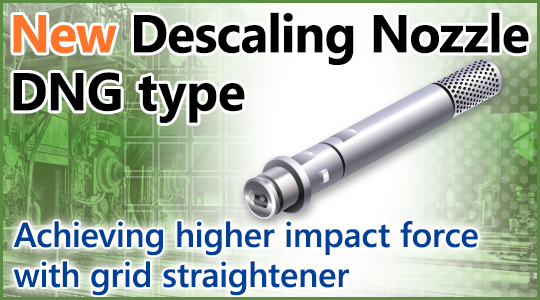
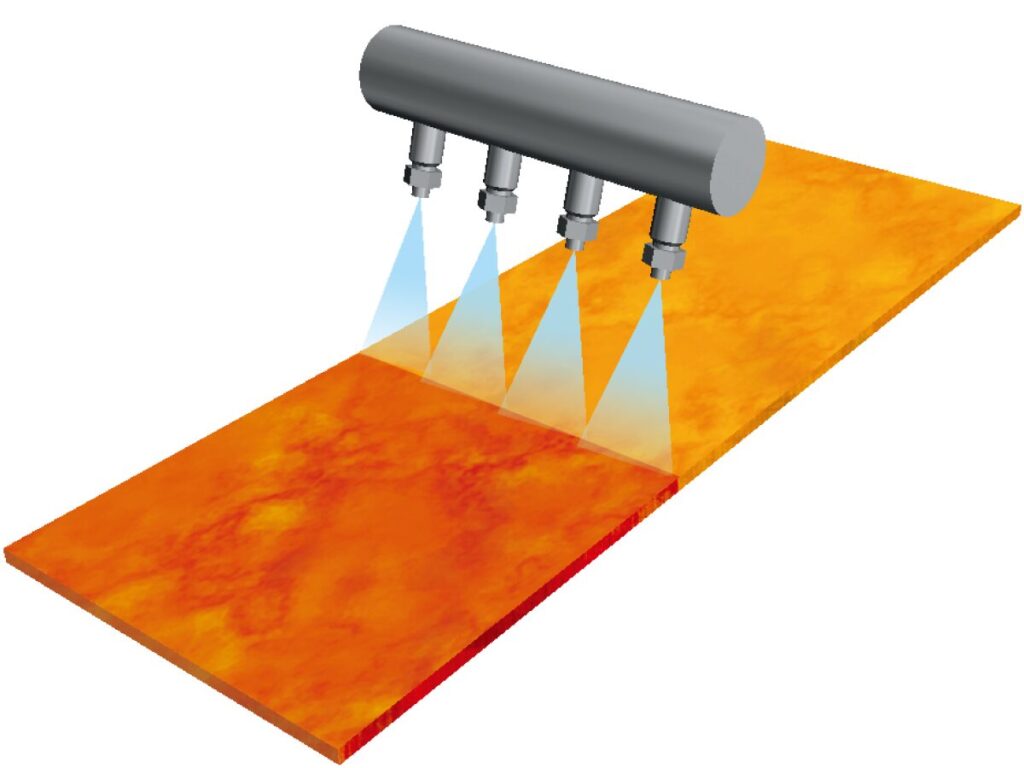
In hot rolling of steel sheet and heavy plate, multiple descaling nozzles are used to remove scale from the steel surface.
If scale is not sufficiently removed, the scale—harder than the steel—can become embedded in the rolling rolls, causing surface defects on the steel known as “scale marks,” which lead to quality problems.
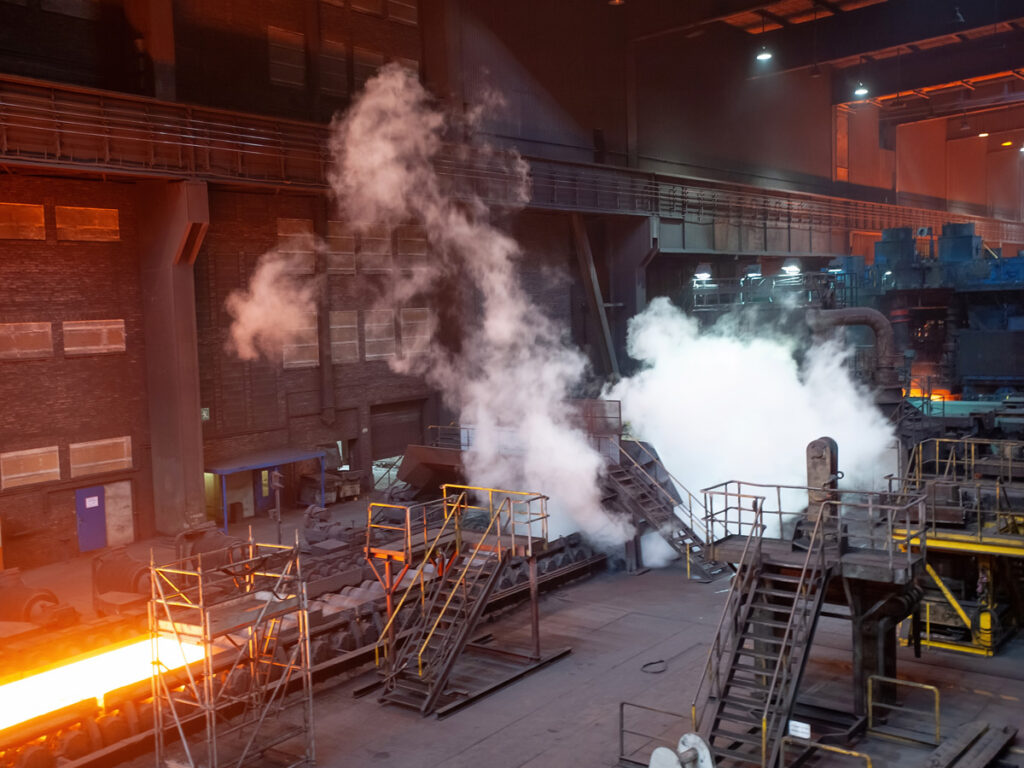
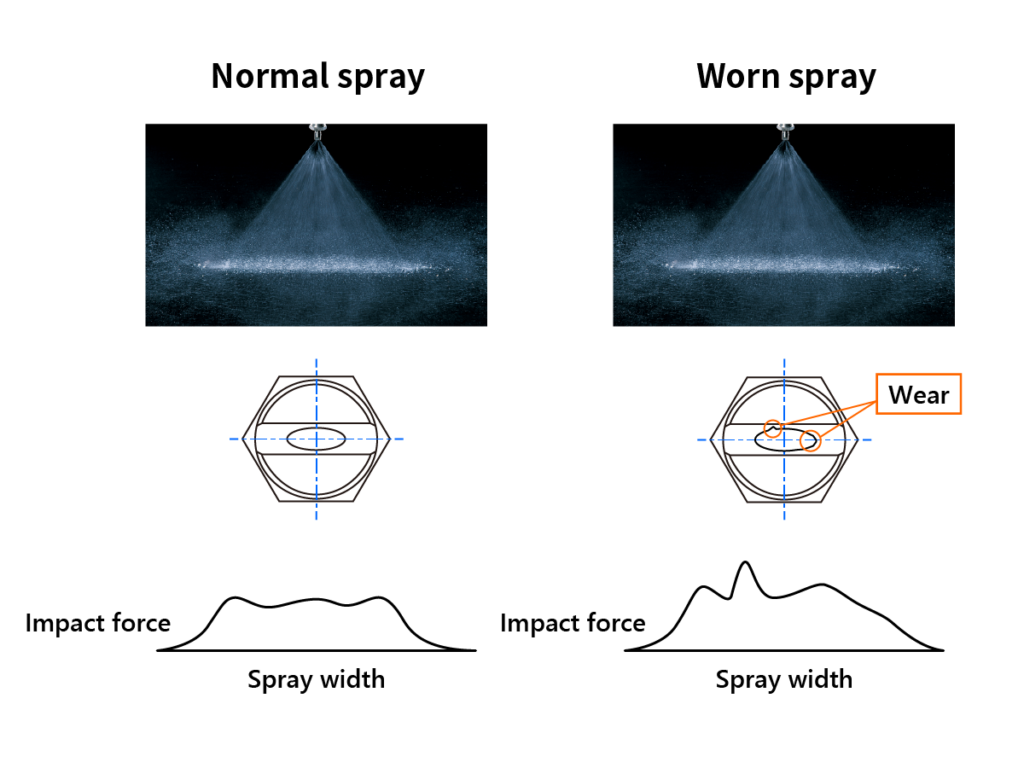
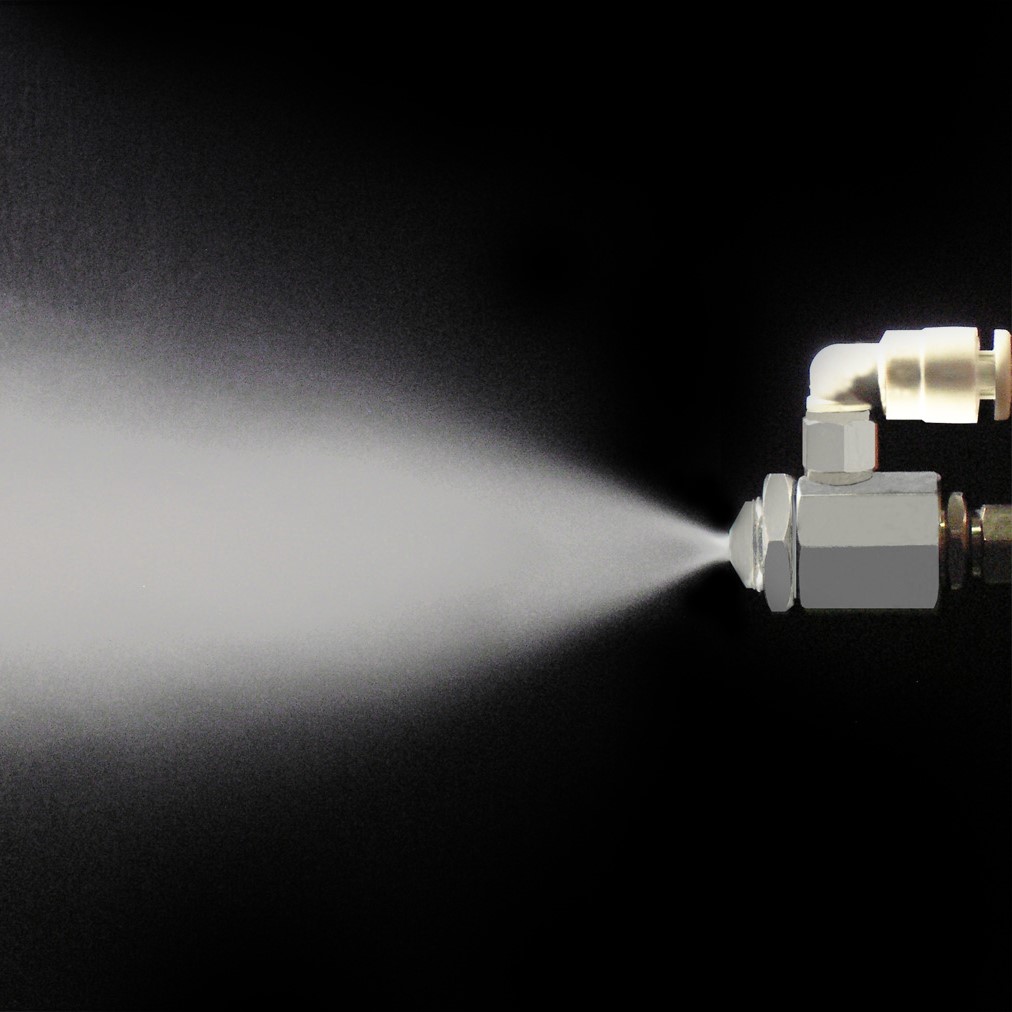
Nozzles installed on hot rolling mills for the purpose of scale removal are called descaling nozzles. Because descaling nozzles spray at high pressures of 15 MPa or higher, they operate in a harsh environment where the orifice is prone to wear.
In recent years, the range of rolled steel grades—such as high-tensile steel sheets for automobiles and electrical steel sheets—has expanded, and quality requirements have become even more stringent. Accordingly, the required spray performance and quality-control level for descaling nozzles have also increased, making it a critical issue to determine appropriate replacement intervals that account for wear, as this directly impacts product quality.
As a manufacturer of both spray nozzles and cemented carbide, we select the cemented carbide grade best suited to the operating conditions and apply it to our descaling nozzles; however, wear from long-term continuous use is unavoidable, and the resulting deterioration in spray performance cannot be prevented.
Solution
We proposed a “nozzle life test,” in which we deliver nozzles with pre-measured initial values for flow rate and spray angle, have them used on the actual equipment for a specified period, then collect and re-measure the flow rate and spray angle after return.
By periodically assessing the degree of wear for nozzles at selected positions in advance, the appropriate replacement interval can be determined scientifically, helping to prevent any deterioration in production quality before it occurs.
Trial
Nozzle wear varies depending on actual operating conditions and the number of spray shots. For this reason, it is difficult to define a uniform replacement interval, and we therefore propose a “nozzle life test.”
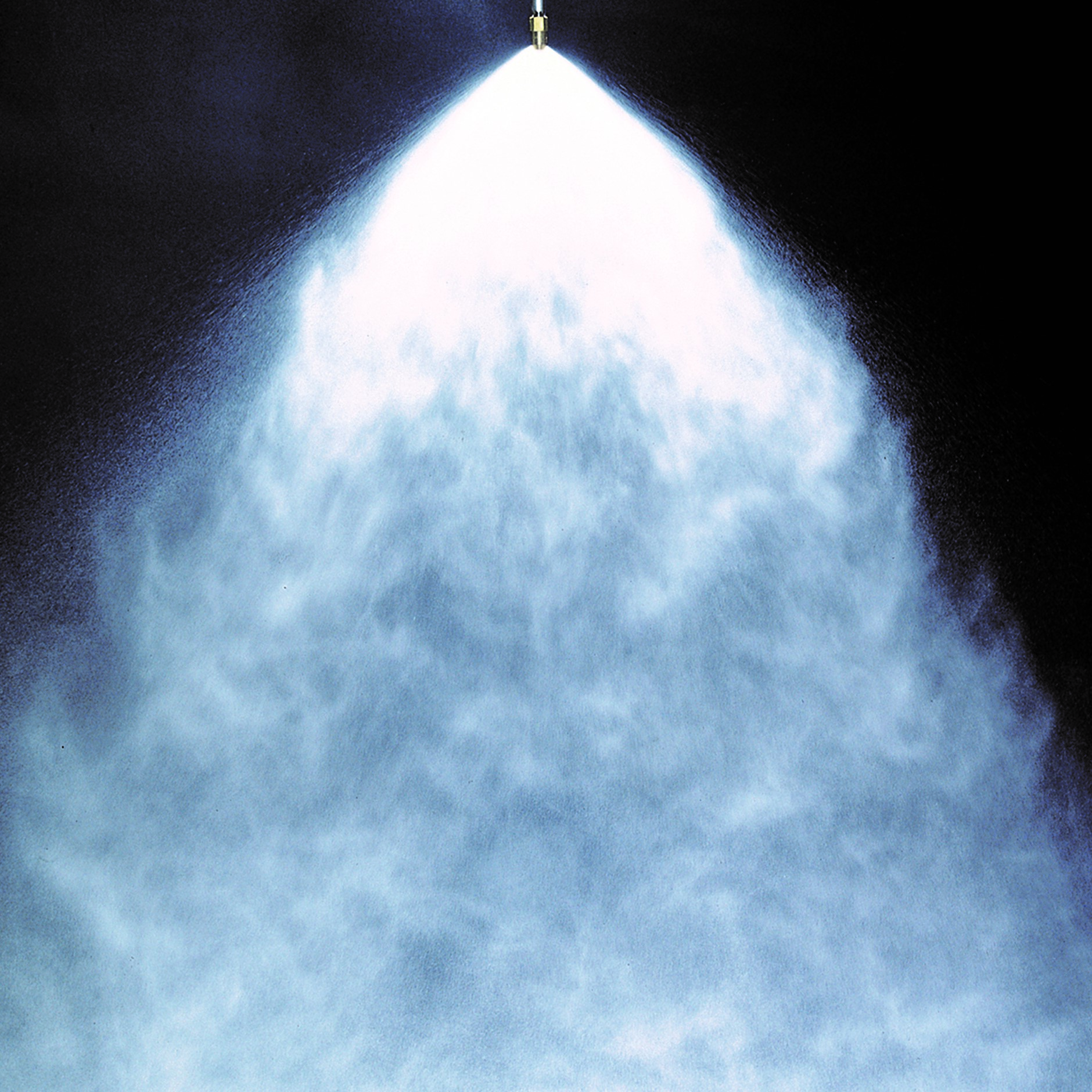
The basic evaluation items are visual inspection, flow rate at a specified pressure, and spray angle. Upon request, we can also measure impact force distribution and perform comparative evaluations.